Selling is a Science – Master it or Fall Behind
How often do you find yourself scrolling through Instagram, TikTok, or LinkedIn, hunting for quick sales tips that promise to transform your results? Searching for that silver bullet to make selling easier?
Let me save you some time: it doesn’t exist.
And before you consider scrolling past this post, thinking, “Too long, not reading”, ask yourself—are you serious about mastering sales, or are you just looking for shortcuts?
Because selling today is harder than ever. And here’s why.
Selling is a Science—And It’s Evolving
Buyers are smarter, more informed, and have seen every sales trick in the book. The way they buy has fundamentally changed. Research shows that buyers only spend 17% of their time meeting with potential suppliers. If you’re competing with two other vendors, that means you get just 5% of their attention.
The harsh reality? Sales reps are no longer the primary channel to customers. Buyers are fine navigating their journey alone.
So, what can you do?
- Maximize your impact during the 17% of time you do get.
- Expand that 17% by being so valuable that buyers want more of your time.
And guess what? The second one only happens if you nail the first.
Think Like a Buyer, Not a Seller
Gartner’s research reveals that buyers are 3x more likely to purchase from salespeople who help them with their buying process.
Three times. Let that sink in.
Your effectiveness comes down to this: Are you providing the exact information buyers need at each stage of their journey?
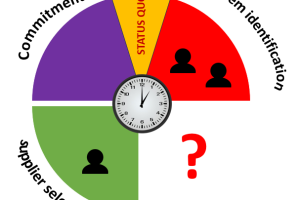
THE FOUR BUYING PHASES
Buyers don’t wake up one day ready to make a purchase. Their journey follows a pattern:

💡 Problem identification– They haven’t recognized the need for change.
💡 Solution criteria – They start exploring solutions.
💡 Supplier selection – They compare suppliers.
💡 Commitment – They finalize and implement the decision.
Most salespeople struggle when buyers are in status quo mode—content with where they are and uninterested in change. Sound familiar? That’s because you’re meeting buyers who aren’t looking yet.
But here’s the secret: Buyers say one thing and think another.
Even when they claim they’re not interested, a small voice in their head is whispering, “I wonder if this salesperson has something valuable to say.” The fact that they took the meeting means curiosity exists. Now, the ball is in your court. You are the one who needs to kick-start their buying process.
Moving Buyers from “Status Quo” to “Let’s Talk”
Buyers don’t change on a whim. Four key triggers push them out of their comfort zone:
- Operational Challenges – Frontline inefficiencies push for improvement.
- Market & Industry Shifts – Competitive pressure and regulatory changes create urgency.
- Internal Pressures – New leadership, cost-cutting mandates, or shareholder demands.
- Technology Gaps – Falling behind on innovation threatens competitiveness.
Most salespeople only focus on operational challenges—exaggerating inefficiencies and pitching their solutions. That rarely works anymore.
Instead, the real opportunity lies in introducing insights buyers haven’t considered—industry shifts, competitive risks, or missed opportunities. And here’s the kicker:
They won’t believe you.
Buyers have been burned by bad salespeople, so your words alone aren’t enough. Instead, let third-party research, credible articles, and real customer success stories do the heavy lifting.
Your job? Bring new insights to the table, challenge assumptions, and shift their perspective.
Is That Enough? Not Even Close.
Even if you win over one stakeholder, buying decisions involve many players. You need internal champions to spread your insights before the next phase—Solution Criteria—can begin.
And most salespeople? They completely skip this step.
🚀 Stay tuned for the next episode: The Buying Phase Most Salespeople Ignore.
——————————————————————————————————–
Are you leading a sales organisation?
If you want to know more about how I can help your sales organisation, send me a LinkedIn DM.